ANT Lawyers

Vietnam Law Firm with English Speaking Lawyers

ANT Lawyers

Vietnam Law Firm with English Speaking Lawyers

ANT Lawyers

Vietnam Law Firm with English Speaking Lawyers

ANT Lawyers

Vietnam Law Firm with English Speaking Lawyers

ANT Lawyers

Vietnam Law Firm with English Speaking Lawyers

Thứ Năm, 30 tháng 10, 2025

9 Important Steps for Successfully Setting Up an Import Export Business in Vietnam

 Starting an import-export business in a foreign country can be challenging, because the difference of cultures, business practice, lack of trusted partners, difficulties to hire.

However, setting up an import export business in Vietnam offers exciting opportunities due to the country’s growing economy, strategic location, and booming trade sector.
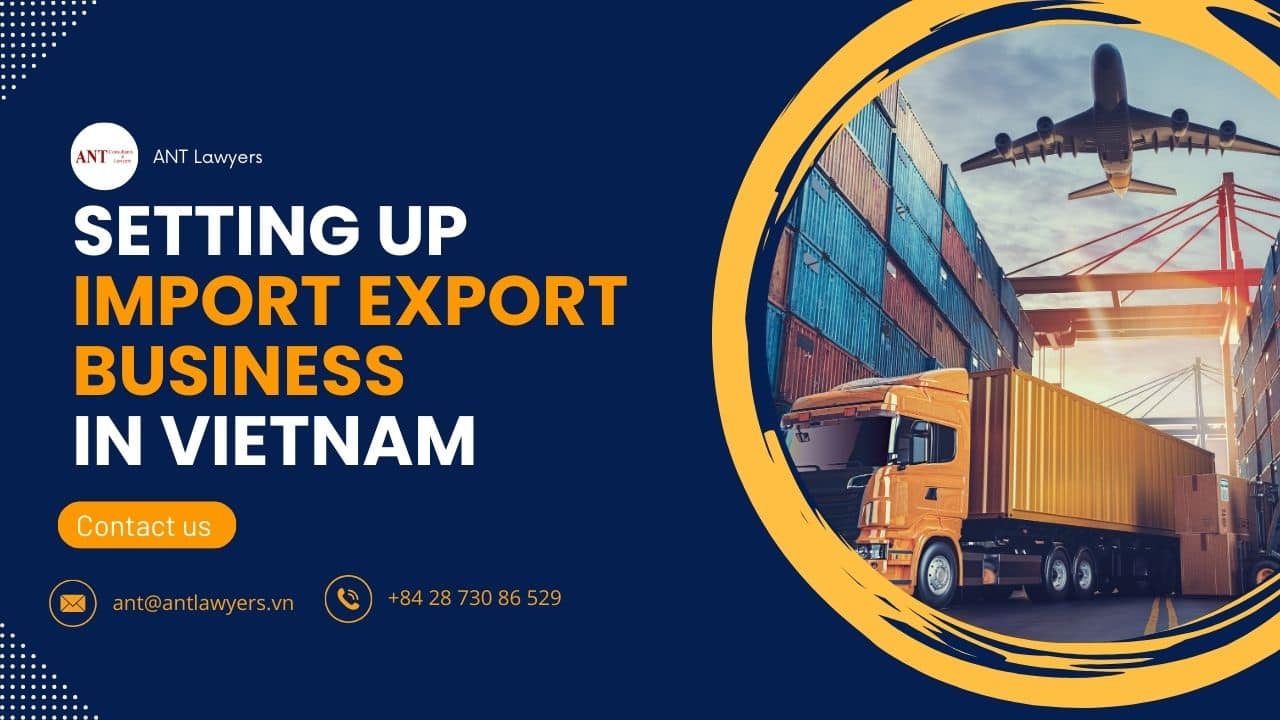
Setting Up an Import Export Business in Vietnam: 9 steps

The following outlines nine powerful steps for foreign investors looking to penetrate Vietnam’s import-export market successfully.

Again, facing challenges also mean the competitors would face the same, and to sustain you have to have your owned roadmap help you turn your business ideas into reality in the promising market.

Why Vietnam?

Before delving into the steps, it’s essential to understand why setting up an import export business in Vietnam is an attractive option.

Vietnam has become a major player in the global supply chain, thanks to its strong export-led economic growth.

The country boasts trade agreements with major economies, including the United States, the European Union, and several Asian nations.

Furthermore, its relatively low labour costs, favorable investment environment, and improving infrastructure make it an appealing location for business owners looking to access both regional and global markets.

Step 1: Research the Market and Your Business Sector

The first and most critical step in setting up an import export business in Vietnam is conducting thorough market research.

Understanding the local market, identifying your target audience, and analyzing competitors will allow you to develop a strategic plan for entering the market.

Vietnam has various high-potential sectors for import-export businesses, including electronics, textiles, agricultural products, and machinery.

  • Key Considerations

Identify demand: Are your products or services in demand in Vietnam or internationally?

Trade regulations: What restrictions or tariffs are in place for importing or exporting specific goods?

Competitors: Who are the major competitors in your industry?

Market research is also essential in determining whether you’ll focus on importing goods into Vietnam, exporting Vietnamese products abroad, or both. For example, Vietnam is known for its export of agricultural products like rice, coffee, and seafood, while it imports machinery and electronics.

Step 2: Choose the Right Business Structure

The second critical step in setting up an import export business in Vietnam is choosing the right business structure.

As a foreign investor, there are several business structures you can establish, such as a 100% foreign-owned enterprise (FOE), or a joint venture.

  • Key Business Structure Options:

100% Foreign-Owned Enterprise (FOE): This allows full ownership and control, which is ideal for businesses wanting autonomy.

Joint Venture: If you’re looking for local expertise and partnerships, a joint venture may be the way to go. This structure allows you to partner with a Vietnamese entity.

Your choice of business structure will depend on your long-term goals, the level of control you wish to maintain, and the amount of investment you’re willing to commit.

Step 3: Understand Vietnam’s Legal and Regulatory Environment

Navigating Vietnam’s legal and regulatory environment is one of the more complex aspects of setting up an import export business in Vietnam. Vietnam’s government has implemented a number of laws and decrees to regulate foreign businesses, and understanding these rules is vital for smooth operations.

  • Important Regulations to Consider:

Investment Law: This law outlines the types of business activities open to foreign investors and any conditions that may apply.

Enterprise Law: Governs the establishment and operation of businesses in Vietnam.

Tax Obligations: Ensure you are familiar with tax rates for foreign-owned businesses, including corporate income tax (CIT), value-added tax (VAT), and import-export duties.

Additionally, some industries in Vietnam require special licenses or permits.

Step 4: Register Your Business and Obtain Licenses

Once you’ve chosen your business structure and familiarized yourself with Vietnam’s regulatory environment, the next step in setting up an import export business in Vietnam is registering your company. This involves submitting the necessary documents to Vietnam’s Department of Planning and Investment (DPI) and receiving approval for your business activities.

  • Documents Needed:

Investment registration certificate (IRC): This outlines your business activities, capital contribution, and ownership structure.

Enterprise registration certificate (ERC): Officially establishes your company as a legal entity in Vietnam.

Step 5: Open a Bank Account and Manage Capital Requirements

Opening a corporate bank account in Vietnam is a critical step in setting up foreign owned import export business in Vietnam. Vietnam has numerous domestic and international banks, offering various services for foreign investors. Choose a bank that aligns with your financial needs and business goals.

Step 6: Secure a Physical Office or Warehouse

Another crucial step in setting up an import export business in Vietnam is securing a physical office or warehouse. Having a physical presence is necessary for business registration, as the Vietnamese government requires businesses to have a registered office address.

  • Leasing Options:

You can either lease office space in a business park or rent a warehouse facility, depending on the nature of your business.

Vietnam offers numerous free trade zones and industrial parks, which may provide tax incentives or reduced customs duties for businesses involved in manufacturing or processing goods for export.

Finding the right location is important not only for operational efficiency but also for complying with the legal requirements of registering your business.

Step 7: Hire Qualified Staff and Understand Local Labor Laws

Human resources are a key component of any successful business, and setting up an import export business in Vietnam is no exception. Vietnam’s labor market is dynamic, and finding the right talent can help your business thrive.

  • Key Considerations:

Labor Laws: Vietnam’s labor laws protect both employers and employees, with guidelines on minimum wage, working hours, and social insurance requirements. Foreign businesses are required to comply with these laws when hiring both local and expatriate workers.

Work Permits: If you plan to hire foreign staff, they will need work permits, which require specific qualifications and approvals.

Ensuring that you comply with labor laws from the outset will prevent legal complications and help foster a productive workforce.

Step 8: Develop a Strong Supply Chain and Logistics Network

Efficient supply chain management is critical to the success of any import-export business. In setting up an import export business in Vietnam, you will need to establish strong relationships with suppliers, manufacturers, and logistics companies.

  • Key Considerations:

Shipping and Customs: Ensure that you understand the import-export procedures, customs duties, and taxes associated with your goods.

Logistics Partners: Partner with reliable logistics companies for shipping, warehousing, and distribution. Vietnam has a developing transportation infrastructure, with deep-water ports, highways, and air freight services connecting it to global markets.

Having a seamless logistics network will help you manage costs and ensure timely delivery of goods.

Step 9: Stay Compliant and Adapt to Changes

The final and ongoing step in setting up foreign owned import export business in Vietnam is staying compliant with local laws and adapting to changes. Vietnam is a rapidly evolving market, and staying updated on changes in trade policies, tax regulations, or labor laws is essential.

  • Compliance Considerations:

Tax Compliance: Ensure that you are up to date on all tax filings and payments. Vietnam’s tax system can be complex, and working with a local accountant or tax advisor can help you stay compliant.

Stay Informed: Regularly review Vietnam’s trade policies and free trade agreements, as these can offer significant advantages or challenges to your business.

By staying compliant and flexible, your business will be better positioned to adapt to the ever-changing global trade environment.

Source ANT Lawyers: 9 Important Steps for Successfully Setting Up an Import Export Business in Vietnam

Thứ Năm, 23 tháng 10, 2025

7 Essential Steps. How to Easily Terminate Representative Office in Vietnam?

Establishing a representative office in Vietnam offers foreign traders access to growing market in Vietnam. However, there may come a time when maintaining representative office in Vietnam becomes not necessary or the license of representative office in Vietnam expires, usually after 5 years, there is a need to terminate representative office in Vietnam.    

Whether due to changes in business strategy, economic challenges, or shifting priorities, expiration of the license, knowing how to terminate a representative office in Vietnam is a key business decision that requires diligent steps to follow. 

In the following, we will explore the essential steps that will help you terminate representative office in Vietnam, taking consideration of legal requirements, compliance, and ensuring that procedures are followed that help minimize risks and avoid unnecessary costs.

Understanding the Legal Implications of Closing Representative Office in Vietnam

Before discussing the process of closing a representative office, it is crucial to understand the legal implications. A representative office in Vietnam is a legally recognized entity, although it does not have full commercial rights like a subsidiary. It is governed by Vietnam’s laws, particularly the Law on Commerce and regulations stipulated by the Ministry of Industry and Trade (MOIT). Failing to properly terminate a representative office in Vietnam can result in legal consequences, such as fines, tax audits, or even legal disputes.

Foreign traders must comply with Vietnam’s legal procedures, which involve notifying various government authorities, settling all liabilities, and formally canceling the license. A smooth termination process ensures that your company can avoid potential legal issues and financial penalties.

Step-by-Step Guide on How to Terminate Representative Office in Vietnam

Step-by-Step Guide on How to Terminate Representative Office in Vietnam

To successfully terminate a representative office in Vietnam, businesses must follow a specific set of procedures.

Here’s a breakdown of the essential steps to ensure that your closure process is smooth and compliant with Vietnamese laws.

Step 1: Review the Legal Framework and Licenses

Before proceeding, review the licensing and legal framework under which your representative office operates. The termination process starts by ensuring that all licenses and permits are in order, including: The Representative Office Establishment License.

Your company must ensure that these documents are updated and that there are no pending violations or legal infractions associated with them.

Step 2: Notify the Relevant Authorities

One of the most critical steps in the process is notifying the relevant government bodies, which include:

-The Ministry of Industry and Trade (MOIT): The MOIT is responsible for overseeing representative offices and will need to be informed about the termination in writing.

-Tax Department: The General Department of Taxation in Vietnam should be notified regarding the closure so they can audit and finalize any tax obligations your representative office may have.

The representative office in Vietnam must file official notice at least 30 working days before the desired termination date. Ensure that all notifications are delivered in writing and follow the guidelines outlined by Vietnamese law.

Step 3: Finalize Tax Obligations and Financial Reporting

Before you can officially terminate a representative office in Vietnam, you must resolve all tax obligations. This includes:

-Filing any outstanding tax reports.

-Paying any remaining taxes i.e. Personal Income Tax for employee.

-Obtaining tax clearance from the Vietnamese tax authorities.

Failing to resolve tax matters can lead to delays or penalties. Make sure to engage  legal advisers in Vietnam who is familiar with Vietnamese laws to help ensure all obligations are met.

Step 4: Liquidate Contracts and Settle Debts

As part of the termination process, the representative office must liquidate all contracts and settle any outstanding debts. This can include:

-Canceling lease agreements.

-Settling contracts with suppliers.

-Clearing any financial obligations to partners, clients, or service providers.

It is important to keep detailed records of these transactions to avoid any legal disputes later.

Step 5: Handle Employee Termination in Vietnam

If your representative office employs staff, you must follow Vietnamese labor laws in handling employee termination in Vietnam. This involves:

-Issuing proper notice to employees (usually 30 days in advance).

-Paying any outstanding wages, severance pay, and social insurance contributions.

-Ensuring that all employee-related obligations are met before the office is officially terminated.

Failure to comply with labor laws can result in legal action from employees and potential fines from the Vietnamese government.

Step 6: File for the Official Closure with the Licensing Authorities

After fulfilling all prior obligations, the next step is to submit the necessary documents for official closure. The required documents usually include:

-An application for termination of the representative office.

-A report on the liquidation of the office’s assets.

-Confirmation from the tax authorities that all tax obligations have been settled.

The application must be submitted to the Ministry of Industry and Trade. Upon receiving the application, the MOIT will review the documents and, if all requirements are met, approve the termination.

Step 7: Conduct a Post-Termination Audit

Finally, conduct a post-termination audit to ensure that all processes were properly executed. This involves reviewing all paperwork, licenses, tax documents, and employee termination notices. The audit helps confirm that no loose ends are left that could cause problems in the future.

Common Mistakes When Foreign Traders Terminate Representative Office in Vietnam

When attempting to terminate representative office in Vietnam, businesses often encounter common issues that can complicate the process.

Below are a few errors to avoid:

-Failing to notify authorities in time: foreign traders sometimes overlook the mandatory 30-day notice period required before termination.

-Ignore tax clearance: One of the most critical steps is obtaining tax clearance, yet it’s often ignored, leading to delays in the process.

-Not settling employee obligations properly: Failure to comply with labor laws can result in legal disputes or fines.

Avoiding these mistakes ensures that your termination process proceeds smoothly.

FAQ: Terminate Representative Office in Vietnam

Q1: How long does it take to terminate a representative office in Vietnam?

The entire process usually takes around 45-60 days, depending on the specific circumstances and whether all documentation is in order.

Q2: What happens if I fail to terminate a representative office properly?

Failing to terminate representative office in Vietnam properly can result in fines, tax audits, and potential legal action against your company.

Q3: Can I re-establish a representative office in Vietnam after termination?

Yes, foreign traders can reapply to establish a representative office again in Vietnam. However, they must go through the full registration process from scratch.

Q4: What are the costs associated with terminating a representative office in Vietnam?

Costs can vary depending on factors like outstanding taxes, employee severance, and professional fees. It’s best to consult with a legal advisers in Vietnam to get an accurate estimate.

Why Following Procedures Matters

To terminate representative office in Vietnam may seem challenging, but by following these essential steps, foreign traders can ensure a smooth and legally compliant process. From notifying the authorities to settling debts and handling employee terminations, every step matters in avoiding legal repercussions and unnecessary costs.

As always, seeking expert legal advice in Vietnam is highly recommended to navigate the complexities of Vietnamese regulations. Failing to terminate representative office in Vietnam properly can lead to significant headaches, but with the right approach, foreign traders can close their operations efficiently and move forward with confidence.

Source ANT Lawyers: 7 Essential Steps. How to Easily Terminate Representative Office in Vietnam?

Thứ Tư, 22 tháng 10, 2025

Avoid 3 Common Pitfalls with Expert Trademark Registration in Vietnam

 Trademark registration in Vietnam is a critical step for businesses aiming to protect their brand and intellectual property in this rapidly growing market.

Avoid 3 Common Pitfalls with Expert Trademark Registration in Vietnam

However, navigating the registration process can be fraught with challenges and potential pitfalls. Understanding these common pitfalls and how to avoid them can save businesses significant time, money, and legal hassles.

We will explore three common pitfalls in trademark registration in Vietnam and how expert assistance can help you steer clear of these issues.

The Importance of Trademark Registration in Vietnam

Before diving into the pitfalls, it’s essential to understand why trademark registration in Vietnam is so crucial.

Vietnam’s economy has been growing steadily, and with its strategic location in Southeast Asia, it has become a hub for international business.

As the market expands, so does the need for businesses to protect their brand identity. Trademark registration in Vietnam ensures that your brand is legally protected, preventing others from using your trademark and benefiting from your business’s reputation and goodwill.

Explanation on Different Aspects of Trademark Registration in Vietnam

We will guide you through the key aspects of trademark registration in Vietnam, focusing on how to avoid common pitfalls and achieve successful registration.

The Stakes of Trademark Registration in Vietnam

Failure to properly register your trademark can result in significant losses, including the dilution of your brand and potential legal battles. 

Common Pitfalls in Trademark Registration in Vietnam

We find three common pitfalls that businesses often encounter during trademark registration in Vietnam.

1. Inadequate Research and Prior Search

One of the most common mistakes in trademark registration in Vietnam is failing to conduct thorough research and prior search. Before filing for a trademark, it is crucial to ensure that your trademark is unique and not already in use. Inadequate research can lead to:

  • Rejection of Application: If a similar or identical trademark already exists, your application will be rejected, wasting time and resources.
  • Legal Disputes: Using an existing trademark can result in legal challenges and potential lawsuits.
  • Rebranding Costs: If forced to change your trademark, the cost of rebranding can be substantial.

How to Avoid This Pitfall?

  • Conduct Comprehensive Searches: Utilize both national and international trademark databases to search for existing trademarks.
  • Hire Experts: Trademark registration experts have access to specialized tools and databases to conduct thorough searches.
  • Consult Legal Professionals: Legal professionals can provide guidance on the likelihood of your trademark being accepted.

2. Incorrect Classification of Goods and Services

Another common pitfall is the incorrect classification of goods and services. Vietnam follows the Nice Classification system, which categorizes goods and services into 45 classes. Misclassifying your goods or services can lead to:

  • Application Rejection: Incorrect classification can result in the rejection of your application.
  • Incomplete Protection: Misclassification may leave certain goods or services unprotected.
  • Additional Costs: Correcting classification errors after submission can be time-consuming and expensive.

How to Avoid This Pitfall?

  • Understand the Nice Classification: Familiarize yourself with the Nice Classification system to accurately categorize your goods and services.
  • Consult Experts: Trademark registration experts can assist in correctly classifying your goods and services, ensuring comprehensive protection.
  • Double-Check Classifications: Before submission, double-check your classifications to avoid errors.

3. Failure to Monitor and Renew Trademarks

Trademark registration in Vietnam is not a one-time process. Once registered, trademarks must be monitored and renewed to maintain protection. Failure to do so can result in:

  • Loss of Trademark Rights: Neglecting to renew your trademark can lead to the loss of legal protection.
  • Infringement Risks: Without active monitoring, others may use your trademark, diluting your brand.
  • Legal Complications: Reclaiming a lapsed trademark can be legally complex and costly.

How to Avoid This Pitfall?

  • Set Renewal Reminders: Keep track of renewal dates and set reminders well in advance.
  • Monitor Trademark Use: Regularly monitor the market for any unauthorized use of your trademark.
  • Engage Legal Services: Legal professionals can manage renewals and monitor trademark use on your behalf.

Benefits of Expert Trademark Registration in Vietnam

Now that we have highlighted the common pitfalls, it’s essential to seek advice for expert assistance in trademark registration in Vietnam. Expert services offer numerous benefits, including:

  • In-Depth Knowledge: Experts have a comprehensive understanding of Vietnam’s trademark laws and procedures.
  • Time Efficiency: Professional services streamline the registration process, saving you time.
  • Risk Mitigation: Experts help avoid common pitfalls, reducing the risk of application rejection or legal disputes.
  • Comprehensive Protection: Ensuring correct classification and monitoring provides complete protection for your brand.

Choosing the Right Experts for Trademark Registration in Vietnam

-Selecting a Reliable Trademark Registration Service

When choosing a service provider for trademark registration in Vietnam, consider the following factors:

  • Experience and Expertise: Look for providers with extensive experience in trademark registration in Vietnam.
  • Reputation: Check reviews and testimonials from previous clients to gauge the provider’s reliability.
  • Comprehensive Services: Ensure the provider offers a full range of services, including research, classification, registration, monitoring, and renewal.
  • Legal Support: Opt for providers with strong legal support to handle any potential disputes.

Few Last Word Reminder

Trademark registration in Vietnam is a vital process for businesses looking to protect their brand and intellectual property. By understanding and avoiding the common pitfalls outlined in this article, you can ensure a smooth and successful registration process.

Engaging expert services not only mitigates risks but also provides comprehensive protection for your brand. Take action today by choosing reliable experts for your trademark registration in Vietnam and secure your business’s future in this dynamic market.

By following these guidelines and seeking expert assistance, you can navigate the complexities of trademark registration in Vietnam with confidence and success.

Source ANT Lawyers: Avoid 3 Common Pitfalls with Expert Trademark Registration in Vietnam

Thứ Ba, 21 tháng 10, 2025

Establishing a Company in Vietnam: A Comprehensive Guide for Foreign Investors

Vietnam has emerged as a preferred destination for foreign investors, driven by its dynamic economy, strategic location, and supportive government policies.

Establishing a company in Vietnam offers opportunities amidst the global economic stagnation exacerbated by geopolitical tensions.

With a young population, a growing middle-income working class, and abundant talent in information technology, Vietnam presents a strong ground for business ventures.

However, as with any overseas investment, entering the Vietnamese market comes with its own set of challenges and risks. This guide aims to provide foreign investors with essential insights and practical steps for successfully establishing a company in Vietnam.

Establishing a Company in Vietnam: A Comprehensive Guide for Foreign Investors

Understanding the Vietnamese Market

1. The Economic Landscape

Vietnam’s economy has been one of the fastest-growing in Southeast Asia, consistently achieving robust GDP growth rates. Despite global economic uncertainties, Vietnam’s strategic initiatives and trade agreements have fortified its economic resilience. The country’s economic policies are geared towards attracting foreign direct investment (FDI), with various incentives and support mechanisms in place for foreign businesses.

2. Demographic Advantage

Vietnam boasts a young and dynamic population. This demographic trend is accompanied by a burgeoning middle-income class, which fuels domestic consumption and drives economic growth. The young workforce is not only abundant but also increasingly skilled, particularly in sectors such as information technology.

3. Entrepreneurial Spirit

The entrepreneurial spirit is deeply ingrained in Vietnamese culture. Small and medium-sized enterprises (SMEs) are the backbone of the economy, and there is a growing trend of startups and innovation-driven businesses. This entrepreneurial environment fosters a competitive yet collaborative business landscape, making Vietnam an exciting place for new ventures.

Types of Business Entities in Vietnam

When establishing a company in Vietnam, foreign investors can choose from several types of business entities, each with its own legal and operational implications. The most common types include:

1. Limited Liability Company (LLC)

An LLC is suitable for small and medium-sized enterprises. It can be wholly foreign-owned or a joint venture with Vietnamese partners. The liability of the owners is limited to their capital contributions, making it a secure option for foreign investors.

2. Joint-Stock Company (JSC)

A JSC is ideal for larger businesses and requires at least three shareholders. It can also be wholly foreign-owned or a joint venture. JSCs are often chosen for ventures that anticipate substantial growth and potential public listings.

Other forms of entities with different sets of benefits could be established for different purposes as following:

3. Representative Office

representative office is suitable for foreign companies looking to explore the Vietnamese market without engaging in direct business activities. It allows companies to conduct market research and establish a business presence but cannot generate revenue.

4. Branch Office

branch office can conduct business activities and generate revenue. It must have a parent company overseas and operates as an extension of the foreign entity.

Legal Framework for Establishing a Company in Vietnam

Legal Framework for Establishing a Company in Vietnam

1. Investment Laws and Regulations

The legal framework for foreign investment in Vietnam is primarily governed by the Law on Investment and the Law on Enterprises. These laws outline the requirements, procedures, and incentives for foreign investors. Key government bodies involved in regulating foreign investment include the Ministry of Planning and Investment (MPI) and the provincial Departments of Planning and Investment (DPI).

2. Investment Registration Certificate (IRC)

The first step in establishing a company in Vietnam is obtaining an Investment Registration Certificate (IRC). The IRC application process involves:

  • Preparation: Collect necessary documents, including the application form, investor’s legal status documents, financial statements, and a detailed business plan.
  • Submission: Submit the application to the DPI.
  • Approval: The DPI reviews and approves the IRC between 15 – 25 working days for non conditional projects.

3. Enterprise Registration Certificate (ERC)

After obtaining the IRC, the next step is to secure an Enterprise Registration Certificate (ERC). The ERC application process involves:

  • Preparation: Gather documents such as the application form, company charter, list of members/shareholders, and the IRC.
  • Submission: Submit the application to the DPI.
  • Approval: The ERC is typically issued within 3 – 5 working days.

Post-Registration Procedures Establishing a Company in Vietnam

Once the IRC and ERC are obtained, there are several post-registration procedures that must be completed to ensure the company is legally operational:

1. Seal Carving

Every company in Vietnam is required to have an official seal. The seal is used to authenticate documents and can be obtained from a licensed seal carving service.

2. Tax Registration

Registering with the local tax office is mandatory. This involves obtaining a tax code and registering for Value Added Tax (VAT) and corporate income tax (CIT).

3. Bank Account

Opening a corporate bank account in Vietnam is necessary for all financial transactions. This involves providing the bank with the company’s IRC, ERC, and other relevant documents.

4. Capital Contribution

The capital contribution, as stated in the company charter, must be deposited within the stipulated timeframe, usually 90 days from the issuance of the ERC.

5. Public Announcement

The company registration information must be published in the National Business Registration Portal. This public announcement ensures transparency and compliance with Vietnamese laws.

Key Considerations for Foreign Investors Establishing a Company in Vietnam

1. Capital Requirements

Different sectors have varying minimum capital requirements. It is crucial to ensure that the proposed capital meets the regulatory standards for the specific industry.

2. Business Scope

Clearly defining the business activities in the company charter is essential. This ensures that the company’s operations align with local regulations and avoid any legal complications.

3. Compliance with Vietnamese Laws

Maintaining compliance with Vietnamese laws and regulations is critical. This includes adhering to tax obligations, financial reporting, and labor laws. Engaging a local legal advisor can help navigate these requirements effectively.

4. Risks and Challenges

While Vietnam presents numerous opportunities, there are inherent risks and challenges associated with establishing a company in Vietnam:

5. Cultural Differences

Understanding and adapting to Vietnamese culture and business practices is vital. The Vietnamese way of doing business often emphasizes relationships and trust, which can differ significantly from Western practices.

6. Market Entry Risks

Entering a new market always involves risks, such as unfamiliar regulatory environments, competition, and market dynamics. Thorough market research and strategic planning are essential to mitigate these risks.

7. Different Buying Behaviors

Vietnamese consumers have unique buying behaviors and preferences. Tailoring products and marketing strategies to meet local demands is crucial for success.

8. Legal and Regulatory Risks

Vietnam’s legal and regulatory framework can be complex and subject to change. Staying informed about the latest laws and regulations is necessary to ensure compliance.

Opportunities in the Vietnamese Market When Establishing a Company in Vietnam

Despite the challenges, the Vietnamese market offers significant opportunities for foreign investors:

1. Growing Economy

Vietnam’s robust economic growth and increasing integration into global trade networks provide a favorable environment for business expansion.

2. Young and Skilled Workforce

The young and increasingly skilled workforce, particularly in information technology and engineering, is a valuable asset for businesses.

3. Government Incentives

The Vietnamese government offers various incentives for foreign investors, including tax breaks, reduced land lease fees, and streamlined administrative processes.

4. Strategic Location

Vietnam’s strategic location in Southeast Asia provides access to major global markets, making it an ideal hub for business operations.

Establishing a company in Vietnam is a promising venture that offers numerous opportunities amidst a rapidly growing economy.

The process involves navigating a well-defined legal framework, understanding the local market, and addressing the unique challenges of doing business in a foreign country.

By following the steps outlined in this guide and leveraging the insights provided, foreign investors can establish and grow their businesses in Vietnam.

For personalized assistance or more detailed information, consulting with a legal expert in Vietnam can help streamline the process and ensure full compliance with local laws.

Embrace the opportunities and prepare for the challenges, as establishing a company in Vietnam can lead to significant rewards in one of Asia’s most dynamic economies.

Source ANT Lawyes: Establishing a Company in Vietnam: A Comprehensive Guide for Foreign Investors